
You’re not the one that I want
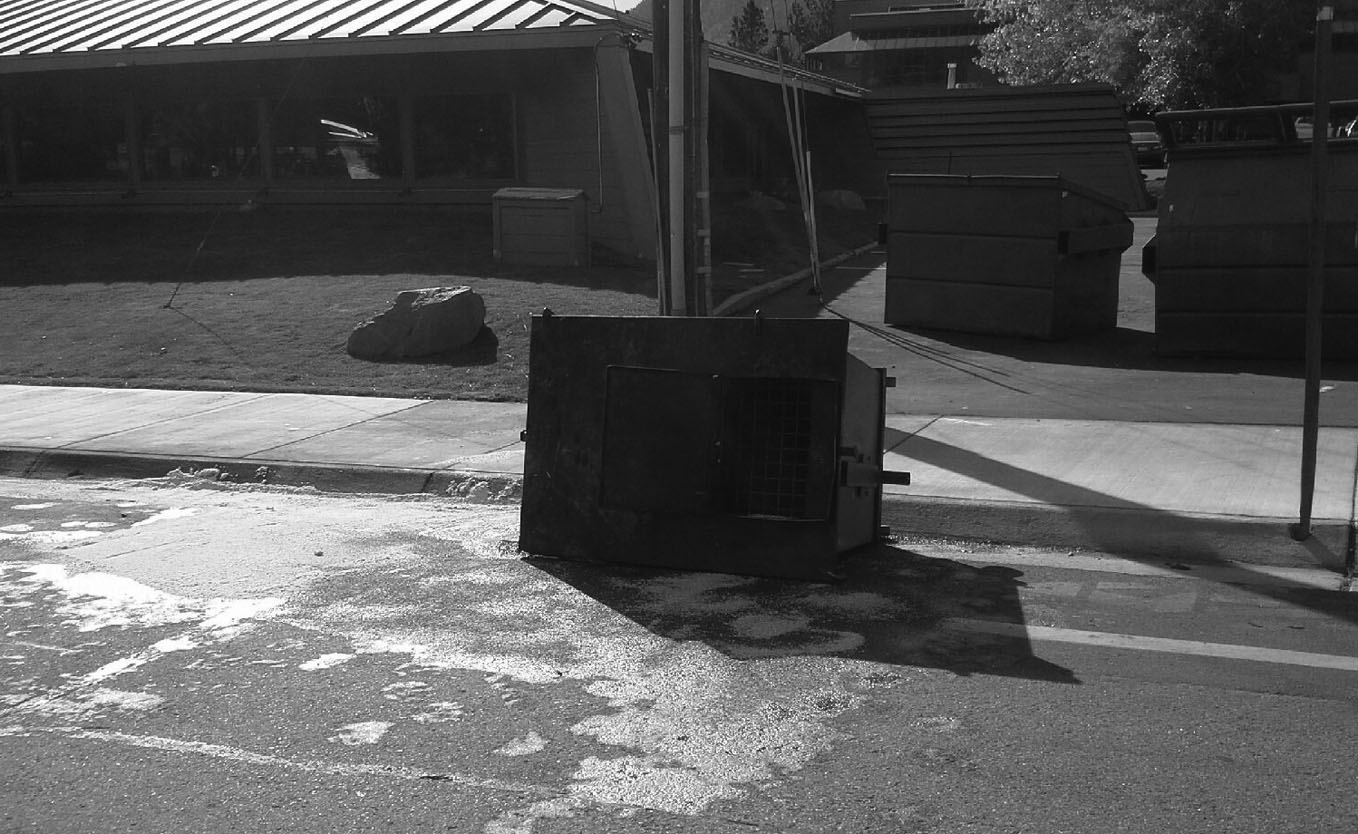
Chart House unleashes grease spill along Old Mammoth Road.
Early in the morning of October 23, frying grease began flowing down Old Mammoth Road, stopping just shy of the storm drain at the intersection of Main Street. A local bear, attracted to the smell of the grease, pushed the receptacle from behind Chart House Restaurant through the parking lot and onto the sidewalk, where it tipped over, going off the curb onto Tavern Road.
Chart House General Manager Ken Murray discovered the spill at 6:15 a.m. and put a bag of sand on the immediate spill site, unaware of how far the grease had spread. “I tried to clean it up myself with absorbent,” Murray said.
Local Todd Robertson was walking his dog on Old Mammoth around 8:30 a.m. “It was like a hockey rink of grease,” he said. “I was literally sliding through cross walks like it was ice.”
He was surprised no one was at the scene to clean it up and said the smell, which lingered for a few days, was “awful.”
“The grease was filling the drainage ditches and being picked up on car tires. It was then being spread for hundreds of feet along the road and through nearby parking lots,” he said.
Robertson took pictures, sending them to Town of Mammoth Lakes Code Compliance Officer Peter Roman as soon as he got home. He also posted them on social media outlets, trying to get the word out to the appropriate authorities. “Someone needed to really step up and deal with the mess. No one had put anything down to stop people from driving through it,” he said.
Soon after, the Police Department and Wildlife Specialist Steve Searles were notified. Tom Heller of the Mammoth Lakes Fire Department responded to a call from the Police Department at 10:51 a.m.
“It was obvious it had been there for some time,” Heller said. “Unfortunately, it was not reported immediately.”
The quantity of grease remains unknown, but Heller said it was anywhere from 30-60 gallons, as the container was more than half full and has a capacity of 60 gallons. It was intended to be recycled into biofuel.
The grease went beyond Rite Aid and the driveway to Footloose Sports, but didn’t make it to the storm drain.
“From a hazmat perspective, the grease isn’t a dangerous material,” Heller said. “But you don’t want old cooking fat rotting in the storm drain.”
Heller said that if the grease had not been given the time to solidify (i.e. if it had been cleaned up right after it was found) it might have come up in the absorbent and been relatively routine to clean.
Town crews spent several hours on Thursday throwing absorbent on the spill, later using the street sweepers to clear the roads. But by this time, the cooking oil had already seeped into the asphalt, creating grease rainbows and requiring a more intense cleaning.
“It was obvious by Friday morning that the bears were still attracted to the grease. They weren’t even looking at traffic, just sitting there and licking it up,” Heller said.
“Every single bear within a couple square miles were drawn to the area,” Searles said. “I can’t remember another incident that has attracted bears from such a long distance this time of year.”
Heller called Jerry Woo, who owns a local snow removal business and has a portable steam cleaner he uses to clean his equipment. Chart House then hired Woo to clean the remaining residue.
Woo said it took him six hours to steam clean Old Mammoth Road on Saturday. “It wasn’t difficult, just more time consuming than anything else,” he said.
Murray also helped Woo on Saturday. “I volunteered and I did my part. I was out there all day with him,” Murray said.
Mammoth Disposal used its forklifts to upright the grease container on Thursday, which is back in its location and being used by the restaurant.
Several years ago, after bears were attracted to the grease-recycling container behind Matsu’s (now the Loco Frijole) on Main Street, Searles and then-Town Compliance Officer Johnny Goetz, spent a month securing and locking all the containers in town.
“The two companies that come from out of town to recycle the grease were very accommodating,” Searles said. “It took us over a month to retrofit, secure and lock every single bin.”
All grease receptacles are now required to be secured against a building and locked shut, neither of which was the case for the Chart House receptacle. Murray was unaware that container was not secured. “It was worked on earlier in the year by the company and apparently it had never been re-secured.”
“It was unfortunate. I wish it hadn’t happened but it did,” Murray concluded. “Now it’s all cleaned up and it’s time to move on.”
Roman cited the Chart House for negligence including feeding wildlife and an unsecured waste container. The cost of the fine is yet to be determined by the court, Roman said. Wildlife fines range from $250 to $700.


