
Peanut Butter leads Eckert to Africa
Mammoth local Rachel Eckert grew up traveling with her family. So when she was offered a year-long stint managing a malnutrition research project in Malawi in 2014, she eagerly accepted. “I wanted to see where nutrition could take me other than fighting obesity,” she said. Although she had been on safari with her family in 2006, her time in Malawi “was definitely a different perspective, being more immersed in what real African life is like.”
Eckert grew up in Mammoth, graduating from Mammoth High School in 2009 and attending Cal Poly in San Luis Obispo, where she obtained her B.A. in nutrition in 2013. While at university, Eckert volunteered as a research assistant for a professor who works with Project Peanut Butter (PBB), based out of Washington University in St. Louis. PBB battles malnutrition throughout Africa by distributing fortified peanut butter to malnourished children and pregnant women.
Once Eckert graduated, she was offered a position managing PBB’s research project for pregnant women in Malawi. The project compares the standard of care malnutrition supplements distributed by the World Food Program and PBB’s nut paste.
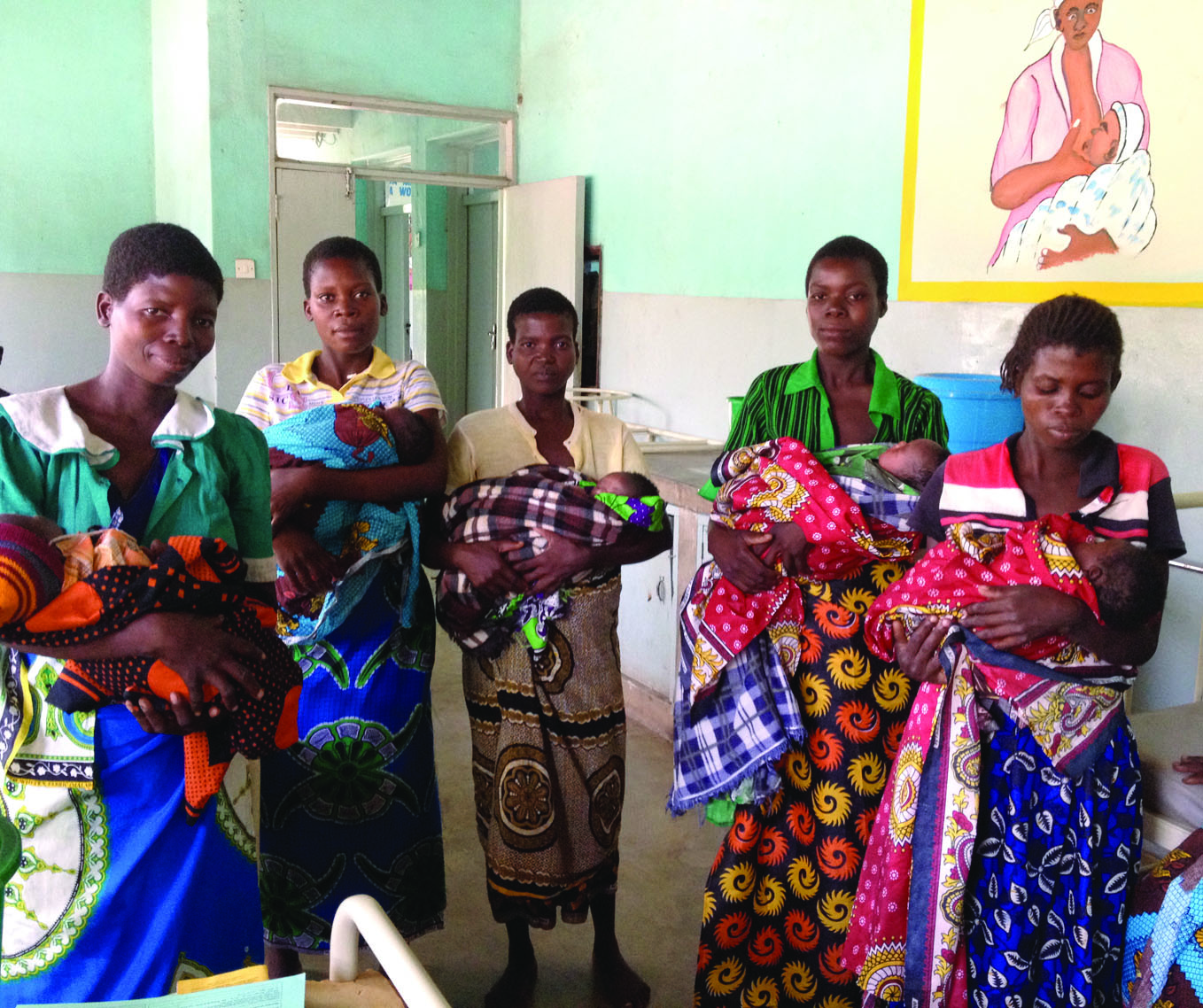
Eckert was based in Blantyre, the second largest city in the landlocked country of roughly 16.4 million in southeastern Africa. Everyday, the PBB team would drive up to two hours to rural clinics, measuring the women’s nutrition status and distributing supplements. The team rotated through 14 different clinics every two weeks.
For the sake of her research, Eckert was kept ignorant to which supplements each woman was taking. Eckert said she “could noticeably tell that certain women had gained a lot of weight,” but remains unsure of the effectiveness of PBB. After her year in Malawi, the research project was only seven months into its three year study.
Although Eckert didn’t experience much culture shock, “It was definitely a shock to me how much work it was,” she said. “It was my life to run the project.”
The team woke up every morning around 4:30 a.m. to reach the rural clinics by 7 a.m. They packed up the clinics between 12 and 2 p.m., driving back to Blantyre, unloading and then repacking the trucks for the next day, before eating dinner and going to bed.
Eckert said the roads in Malawi are “pretty poor,” mostly dirt, and not just for cars. “We always joked that it was like a video game—there would be chickens and goats, people with baskets on their heads, and bikes right in front of you. You just kind of had to go slow because things would pop out in front of you at all times.”
But she learned the most about Malawi on the long car trips, observing different scenarios out the window and asking her Malawian staff questions. “We would pass by something that didn’t make sense [and we] had four people who were willing to share and explain everything about their culture,” she said.
While at the clinic, Eckert was responsible for measuring the women’s nutrition levels, although she did experience quite a large language barrier. Fortunately, the PBB team includes a full Malawian staff of nurses who translated and conducted education classes for the women, mostly using song and dance to communicate.
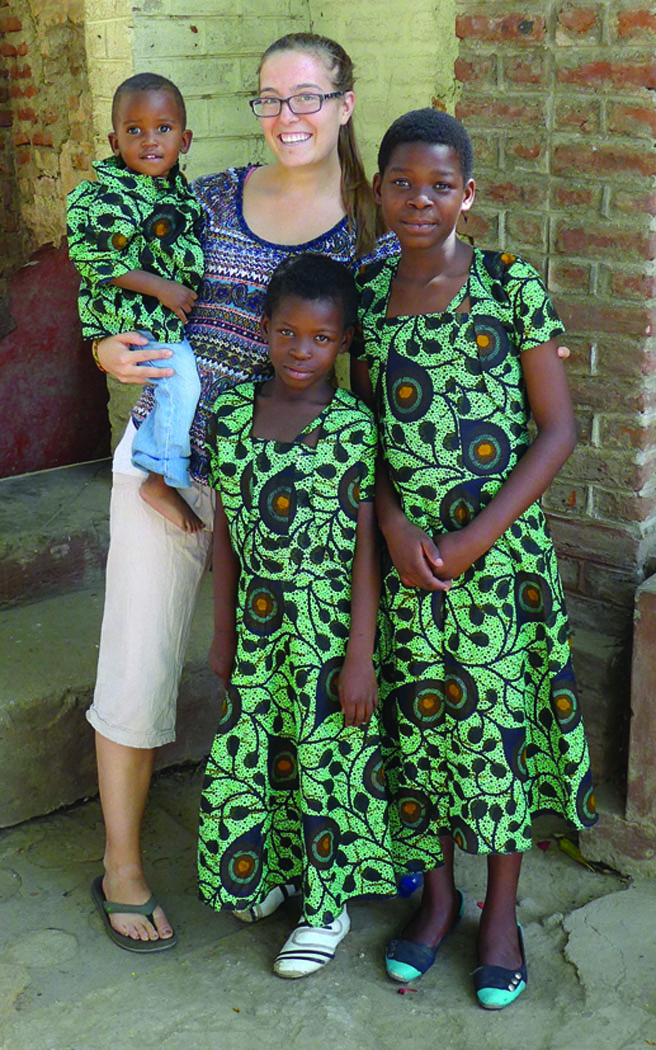
Although the language barrier prevented Eckert from making many local friends, “everyone who we worked with was like my family. Malawians are wonderful and welcoming,” she said.
Eckert described the Malawian people as “stoic,” although she enjoyed breaking through their shell and making them laugh.
Despite all the work, Eckert did find time to explore Malawi with other volunteers. Her favorite place was Mount Mulanje, an almost 10,000-foot peak that reminded her of Mammoth. “We joined the mountain club and we had access to several huts on the top. Any chance we got we would go camp,” she said.
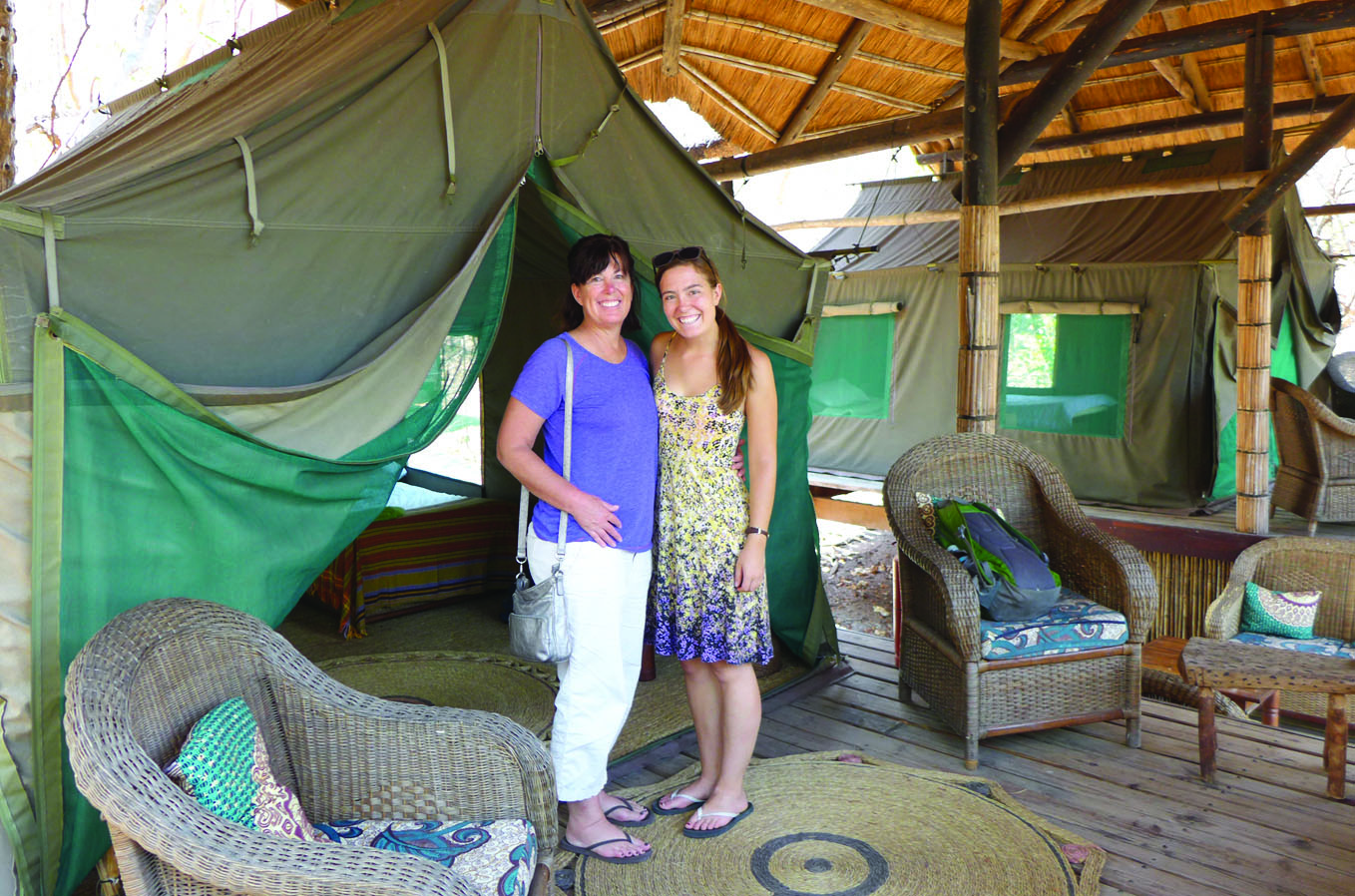
She also enjoyed going on several safaris to see elephants and giraffes, as well as snorkel and hang out at Lake Malawi, where she observed the electric blue endemic cichlid fish. If she wasn’t traveling on her days off, she would roam the open-air markets in Blantyre.
“It’s called the warm heart of Africa because it’s a very peaceful country,” Eckert said. “I knew my way around I could get anywhere and I felt safe.”
Despite this, Eckert never truly felt like a local because of the color of her skin. “When you drive down the street everyone calls out ‘Azungu Azungu,’ which means white person,” she said.
The only two times Eckert was ever concerned about her safety were during the Ebola outbreak in West Africa and riots following a rigged election. About Ebola, Eckert said, “We didn’t know how fast it would spread.” But she quickly realized that her malnourished patients in the rural clinics weren’t the Malawians who would be traveling to West Africa and contracting the virus. “We would have found out about [any cases in Malawi] before we were ever exposed to it,” she said.
In the end, there are no recorded cases of Ebola in Malawi, although many locals were concerned about it after watching BBC and other news coverage on the outbreak, Eckert said.
As for the elections, PBB restricted all volunteers to their compound for several days following the outbreak of riots. Incumbent president Joyce Banda tried rigging the elections, but after a few days of riots, the government held new elections and the favored candidate, Peter Mutharika, won and the rioting stopped.
“It made me really appreciate my right to vote, because I saw how much it meant to the locals,” Eckert said.
Eckert returned to Mammoth in December. Re-entry has been easier than she expected, but “I miss having a purpose,” she said. “Every day I had something I was giving my all to. But here, I love having free time and enjoy the outdoors and what Mammoth has to offer.”
Eckert encouraged anyone with an opportunity to travel to do so, saying she learned a lot from her experience in Malawi.
Lesson number one: “Even if two cultures can be so extremely different, there are still universal truths that we are looking for. Everyone wants joy and everyone wants their families to be safe and happy. It’s helping me search for my own passions and what is true to all humans, not just to myself and my own upbringing.”
And lesson number two: “I realized how much I loved the mountains … I missed being able to leave my back door and go on a 10 mile hike, having my dog and my best friends right there along with me.”
Currently working at a restaurant in Mammoth, Eckert is considering working oversees again, but this time in a place where they speak Spanish


