
The life of Shizuko Fujioka (Née Sakihara)
-
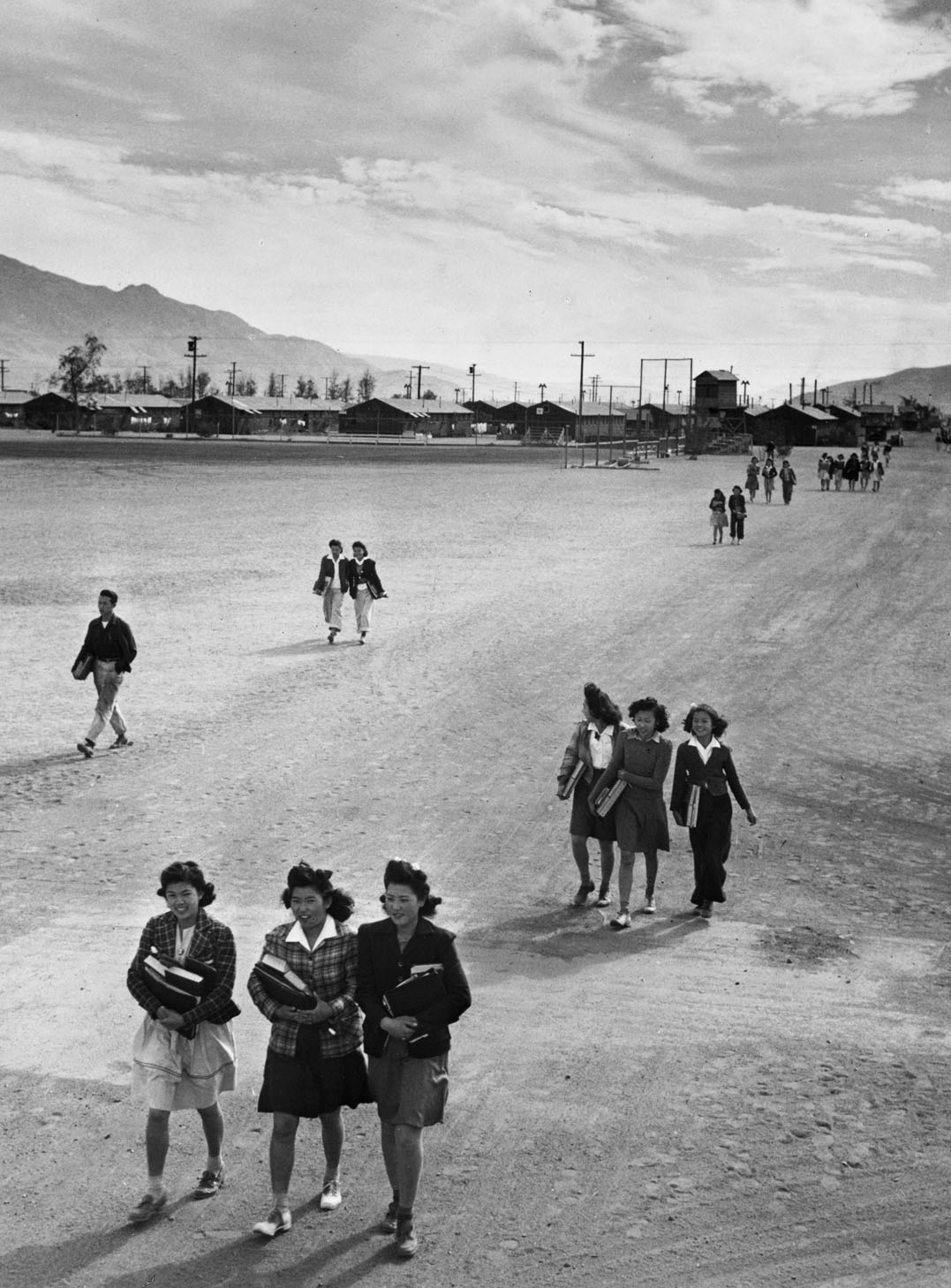 This photo of schoolgirls at Manzanar Relocation Center taken by Ansel Adams in 1943 or 1944 includes Shizuko Sakihara (bottom left), who is profiled by our Charles James. The annual Manzanar Pilgrimage event takes place Saturday at noon at Manzanar, nine miles north of Lone Pine. Photo courtesy: Ansel Adams.
 -
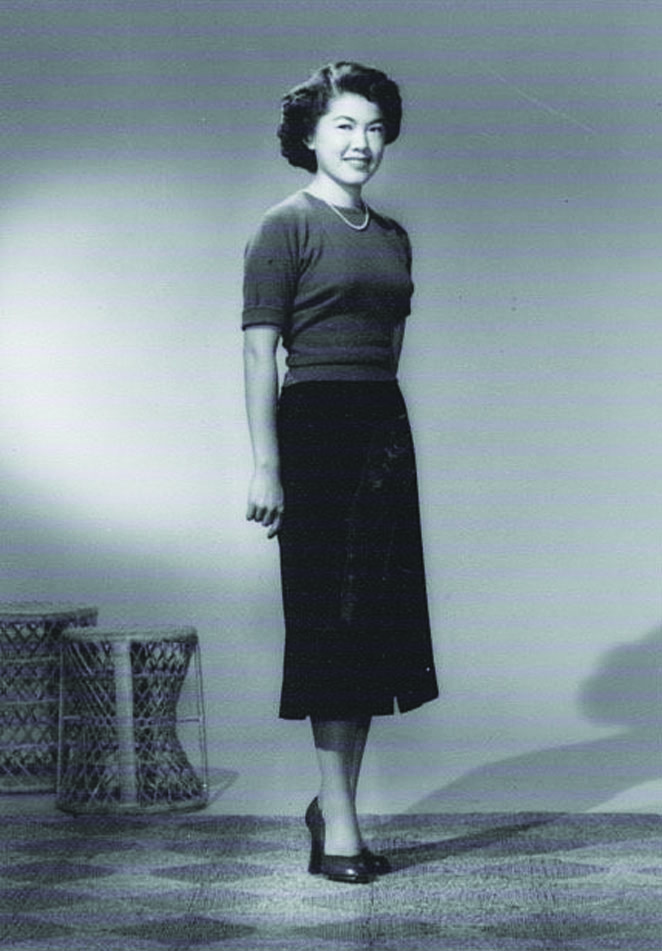 Shizuko “Shiz” Fujioka. Photo courtesy: Shizuko Fujioka.
In the months after the surprise Japanese attack on Pearl Harbor on December 7, 1941, a carefree 15-year-old native-born Japanese American girl just out of Emerson Junior High School in West Los Angeles was suddenly sent with her parents to live behind barbed wire in a remote relocation camp 200 miles away. The camp was euphemistically called the Manzanar Relocation Center. That young girl was Shizuko Sakihara, who goes by the nickname “Shiz.”
The Manzanar Relocation Center, located in the Owens Valley, was far different from the mild coastal areas of Southern California. The Owens Valley was blazingly hot in the summer, brutally cold in the winter, and often had fierce winds and dust storms both day and night.
Shizuko, typical of a young girl raised in Southern California, was easy-going. In the 1930s, before the concept of “teenager” became fashionable, the world was divided between “adults” and “children.” Then, a child was expected to defer to their parents and other adults. It was not unusual for a child to simply accept whatever decisions their parents or adults made for them.
So, when asked her reaction to being forced to live at the camp, Shizuko replied:
“As a young girl, I just did whatever I was told to do whether that was moving to another place [Manzanar] or waiting in line for everything while living in the camp. You just accepted and adjusted to it.” She went on to say, “I was not frightened by the move to the camp. I found it very interesting to live around so many Japanese Americans of all ages after having lived around mainly white Americans in West Los Angeles. It was interesting to go from being a ‘minority’ in West Los Angeles to a ‘majority’ at the camp.”
According to her four children, Margaret, Robert, Janice, and Tom, their mother is “loving, optimistic, and always encouraging to others.” Shizuko’s children added that she has always been very patriotic and proud of being an American, and that she was also a very forgiving person.
In the 1930s, American-born children of Japanese descent were strongly encouraged to become acculturated and to be patriotic to this country to counter any perception of loyalty towards Japan. Shizuko was no exception. Like many others her age, she loved and embraced the popular American culture of the 1930s and 40s. She was an American. Period.
Describing herself as a young girl, Shizuko said that she was “friendly, caring and reserved.” Like many other children at Manzanar, she insists that she was not embittered by her experience in the Manzanar Camp. “I liked camp life,” she says. “It was an adventure. And I was with my parents, so I was happy.”
Shizuko said that she also loved attending the camp’s school and that she had a group of a half dozen girlfriends with whom she would play table games, sit around and talk about their day, visit each other, and go to movies that were held at the camp. She recalled borrowing a neighbor’s bicycle to ride around the camp, as well as reading and doing homework.
Shizuko’s biological father, Takeo Minami, was born in Japan, and he died when she was very young. Her stepfather, Ikumori Sakihara, was born in Okinawa and was a barber in the relocation camp. He would later become a naturalized American citizen. Her mother, Hisako, was born in Hawaii and worked in the camp’s centralized cafeteria.
During their stay in Manzanar, the family would often be allowed to travel on “furloughs” inland away from the west coast. They would travel to Utah or Idaho, where her parents would be paid to work on independently-owned farms and stay at the owner’s home or in separate housing for two to three months during harvest season.
Famed photographer Ansel Adams took a photo of Shizuko on one of his several trips to the camp in 1943 and 1944. The photo, titled “School children, Manzanar Relocation Center, California,” shows three young school girls in the foreground with others following behind them across a barren roadway leading to a block of barracks in the background. Shizuko is the one on the far left.
After graduating in the last Manzanar High School Senior Class of 1945 and leaving the camp, Shizuko and her family returned to West Los Angeles. She said the family was treated well on their return and there was little hostility from the white community.
“My mother performed house cleaning, while my father did the gardening for a Mrs. Price, a widow. We lived in an apartment above her garage,” she says. “Eventually they began cleaning and gardening for other neighbors, one of whom was the famous singer, actor, and comedian Jimmy Durante.”
On returning to West Los Angeles and working as a film developer for Susan’s Photo Studio in Beverly Hills, Shizuko attended Los Angeles City College, where she met her future husband, Yoshiro “Babe” Fujioka, while eating lunch in the cafeteria. She was 26. He was 25. Apparently “Babe” needed the encouragement of his best friend, Bob Ogawa, to introduce himself. The couple married and have four children.
Shizuko Fujioka now lives in Texas with her youngest daughter, Janice Frey. She is looking forward to attending the 70th Manzanar High School Reunion in Las Vegas in September.


