
Mammoth locals aid earthquake victims
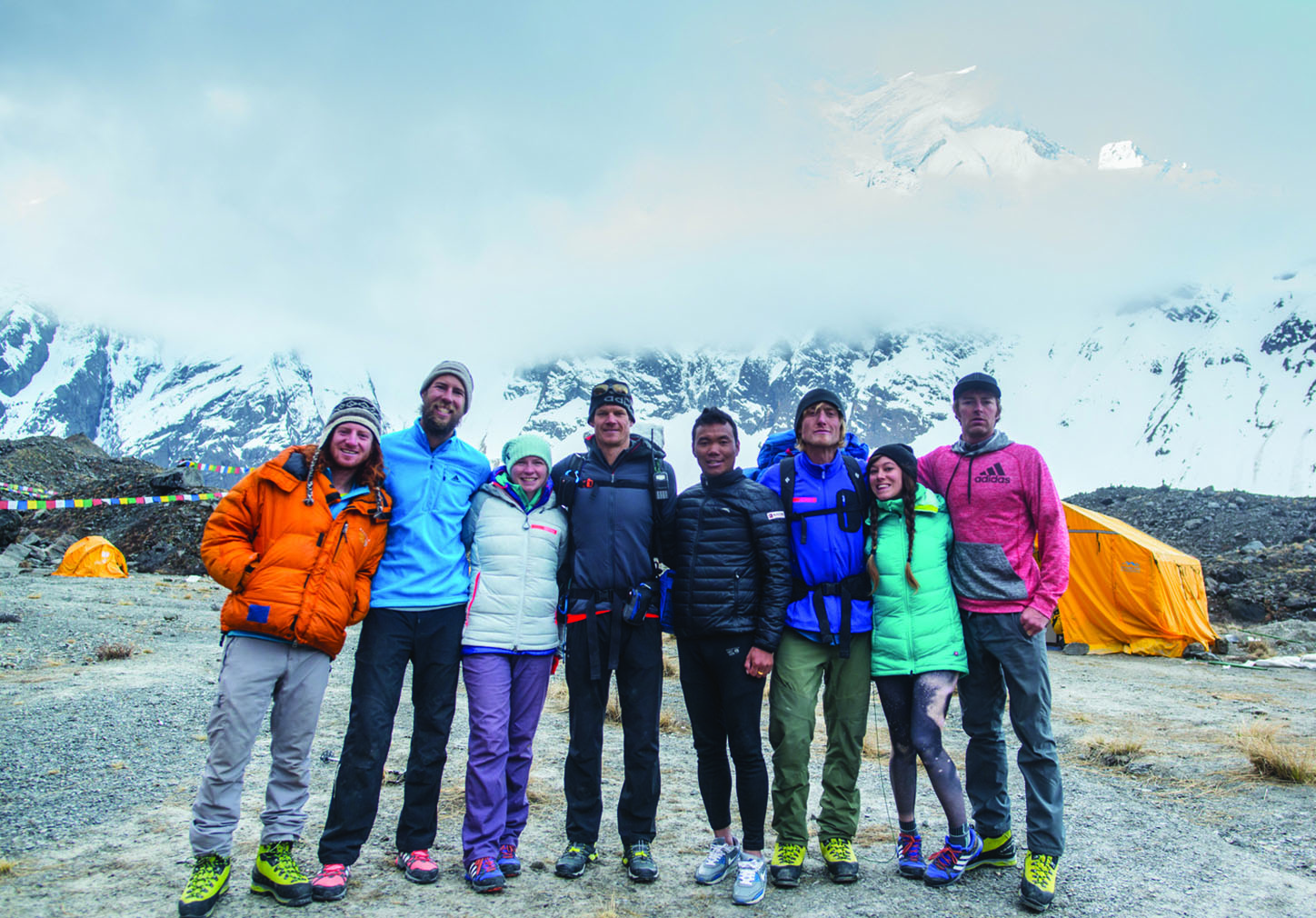
Mammoth locals, Cody and Cherise Tuttle, left the East Side at the beginning of April as part of an expedition team to film climbers Don Bowie, Jess Rosskelley, and Ben Erdmann as they attempted to summit Annapurna, an 8,000 meter peak in Nepal, without oxygen. Before summiting, the entire team had returned to base camp based on forecasts of snow when a 7.8 magnitude earthquake, causing a death-toll of more than 7,000, devastated the small Himalayan Country. Cherise writes about the experience and the team’s new objective.
It was day 18 and I had just settled in my warm sleeping bag to finish off a book when the ground started to roll under me. I froze until I heard yelling from the cook tent for everyone to run. My heart caught in my throat as I remembered the towering sérac (a house-sized column of glacial ice, often formed by intersecting crevasses on a glacier) hanging over the mountain wall—our base camp nestled underneath. If the sérac fell we wouldn’t be able to run far enough fast enough.
I shoved on my boots and ripped the zippers of my tent open. Frantically looking around, I saw Cody waving me over and together, with the rest of our camp, we ran across the dry riverbed as far from the mountain as possible. We heard the rumble of ice and snow falling in the distance. The mountains around us creaked and groaned in protest. My lungs were burning from sprinting at such a high elevation and my heart seemed to pound out of my chest with adrenaline. As the ground stilled, we looked around realizing nothing was smashing down around us. Nervous laughs bubbled out of us as we counted heads.
We felt a handful of aftershocks after the initial earthquake. Every time my breath would catch as I listened for rocks falling around us, but all I could hear were avalanches in the distance. At one point we were sitting on an eroding ridge when we looked up to see a cloud hurtling toward the valley. As the dust cloud from an unseen avalanche settled, it softly snowed on us from a few miles away.
As days passed, we learned about the conditions and devastation of other base camps as well as cities and villages throughout Nepal. We found ourselves in a unique circumstance. With highly qualified team members who could be a huge asset to relief aid, we knew we couldn’t stay and climb.
But we were stuck on the mountain. All helicopters were being used for rescue aid and our base camp was considered safe from disaster. We looked at every angle to extricate ourselves off the mountain. After several days, half of our team ultimately decided to make the long and dangerous trek down to Tatopani, a small mountain village used as the landing zone for helicopters to shuttle people up or down to base camp. The other half of us stayed at base camp to pack up, organize and wait.
The climbing team hiked three different mountain passes over 13 hours before it reached the first mountain village. The team said the danger of hiking down rivaled that of the summit—wading through waist deep snow and traversing steep slopes covered in slick grass, using ice tools to prevent plummeting thousands of feet.
The next day, the team spent hours on a packed bus traveling down what I would call a wide goat track rather than a road. Team members all arrived to Tatopani later that afternoon. There, our expedition company, Seven Summit Treks, arranged for a helicopter to come get the rest of the team at base camp. With so many people still at camp, we had begun to run out of food. Eight Sherpas including the cook crew from various teams are still at base camp with about a hundred bags of gear, as we only had room for one bag each to bring down.
We rented a bus and a jeep to drive us 100 kilometers down to Pokhara. It took six hours, driving through thunderstorms threatening mudslides the entire time. We were relieved to find Pokhara relatively unscathed by the earthquake with electricity and internet. We will be based here for the next several weeks, partnering with Karma Flights, a branch of the Cloudbase Foundation.
Our main focus is to travel to remote villages that have not received aid in the district of Gorkha (the epicenter of the earthquake). The team will make contact with these villages, assessing damages and casualities before sending that information back to Karma Flights for the allocation of aid supplies. This way we can be more efficient about the aid we send, knowing exactly what they need.
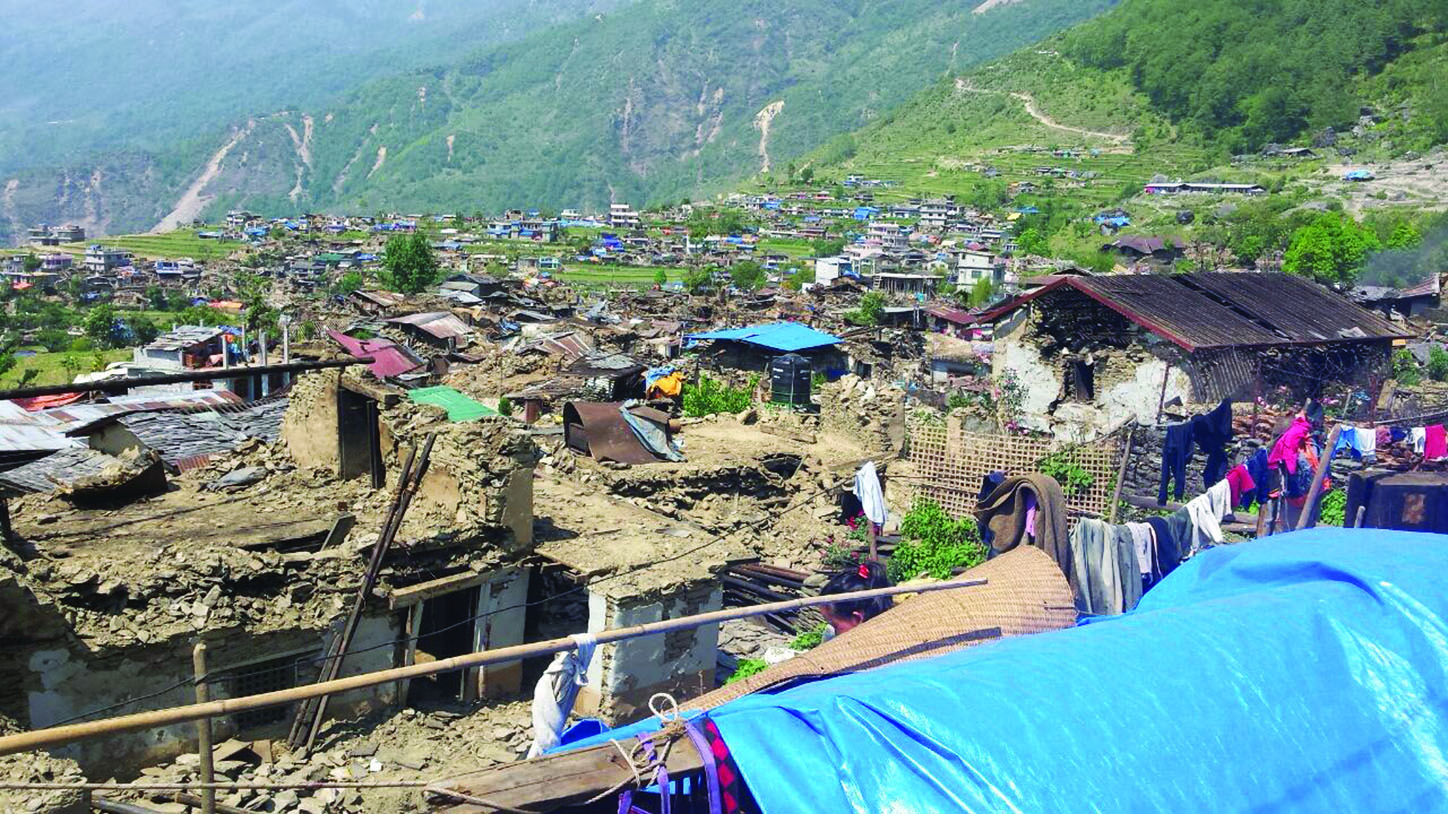
Yesterday I spoke with team leader, Don Bowie, in the Gorkha district. “It looks like someone slipped their hand under the houses and just shook. Everything is leveled. I haven’t found one house still fully standing,” he said.
There are small makeshift tent villages popping up and, in the devastated areas, there is no clean water available. Our team purified water from a puddle last night to drink. With thousands of homes demolished throughout the country, the immediate needs are tents, sleeping bags and water filtration systems. We have delivered 1,000 kilograms of food to these villages already. More long-term aid is needed to rebuild entire villages and towns. The majority of people live off the land and will be forced to rebuild their entire lives.
Our hearts are breaking for the Nepalese, as they have no way out and no homes to return to. They are some of the most content, helpful, and giving people I have ever met. We feel like we were at the right place at the right time in order to help garner as much international support as possible. Many relief crews have been turned away at customs so it’s amazing that we’re already in the country. Our prayer is that people do not forget this small country but gather together and help.
The team has raised $15,000 in a few days and hopes to triple that in the coming weeks. To donate visit http://www.morethansport.org/partner/nepalrelief Read daily updates on Facebook by following Cody or Cherise.
Dr. Mike Karch of Mammoth Hospital also left this week to aid in relief efforts through International Medical Corps.


