
Not a good place for an accident
Lone Pine’s Southern Inyo Hospital closes ER.
Southern Inyo Hospital’s Emergency Room in Lone Pine has closed due to financial difficulties. There is no word on when, or if it will reopen. The hospital’s Board of Directors decided after a special meeting on Nov. 30 that it had enough money to pay staff wages, but that there was not enough left over to pay the doctors. The next day was payday for the doctors, but without salary, doctors couldn’t work. Two days later, on Thursday, Dec. 3, the ER closed.
There’s enough money yet to cover this week’s payroll, but the hospital itself is living paycheck to paycheck. Hospital Administrator Lee Baron told The Sheet that Inyo County is working on getting the hospital its tax revenue, a bi-annual pay out, by Dec. 15.
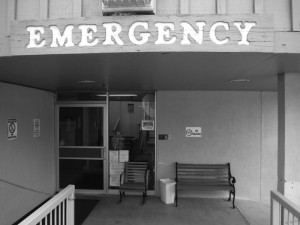 Barron said the closure is all about money. The hospital’s annual revenue is about $8 million. The ER costs about $1.2 million a year, second only to wages and salaries. The hospital would hire an ER doctor or welcome a physician willing to work pro bono, but California law states that a hospital cannot hire an ER doctor directly; the doctor has to be part of a group, such as Coast to Coast, which provided an ER team to Lone Pine.
The hospital is small but covers a geographic area as big as a small New England state, from Independence to Pearsonville and Death Valley to Mount Whitney. It is a vital facility in a remote part of the country.
Luckily Sierra Lifeflight has come to rescue. A Lifeflight crew is staying at the doctor’s residence on site while its aircraft is in a secured hangar in Bishop, ready to transport emergency patients to Northern Inyo or Ridgecrest Regional, depending on the case. When a 9-1-1 call comes in, the fixed wing aircraft takes off from Bishop to Lone Pine. Mike Patterson, owner of Lifeflight, said the crew are trained to handle critical care and “can do anything an ER can do.” Emergency medical technicians (EMT) from the Lone Pine Volunteer Fire Department are also on standby and provided Lifeflight with an emergency vehicle.
Patterson is paying for the extra cost of wages and transportation out if his own pocket. He said if the ER can’t be reopened, Lifelight will apply to the state to have a permanent base in Lone Pine and have aircraft there, making things a little easier financially for Patterson.
Patterson said he’s doing this because, “Lifeflight has served the area for more than 23 years … and are committed to the community and only want to see the best for Inyo County.” Not having emergency services in Southern Inyo could be a “real disaster” and people could die, Patterson said.
Patterson said he’s trying to get a membership program for local residents that would pay for what insurance doesn’t for transportation costs. The membership group would be through a network of area ambulance companies, Patterson explained.
SIH has the only ER for more than 100 miles in any direction, Barron said. But the rural hospital doesn’t have many customers, so revenue is low. The ER sees less than 100 patients per month. It might be a small facility, but the staff must be proficient in handling a variety of situations, from high-altitude sickness and frost bite to heat stroke and dehydration to traffic accidents and trauma. A physician with the skills to deal with these situations doesn’t come cheap, Barron said.
The expensive mandates of the Affordable Care Act are partly to blame for SIH’s financial woes. There is also a paradigm shift in the U.S. healthcare industry, Barron explained. The push is to keep people healthy before they need to go to the hospital, and to keep patients in the safe and comforting setting of home. This is great news for patients, but not good for business. Barron said she was unsure what these changes will mean for the future of the hospital.


