
Changing light
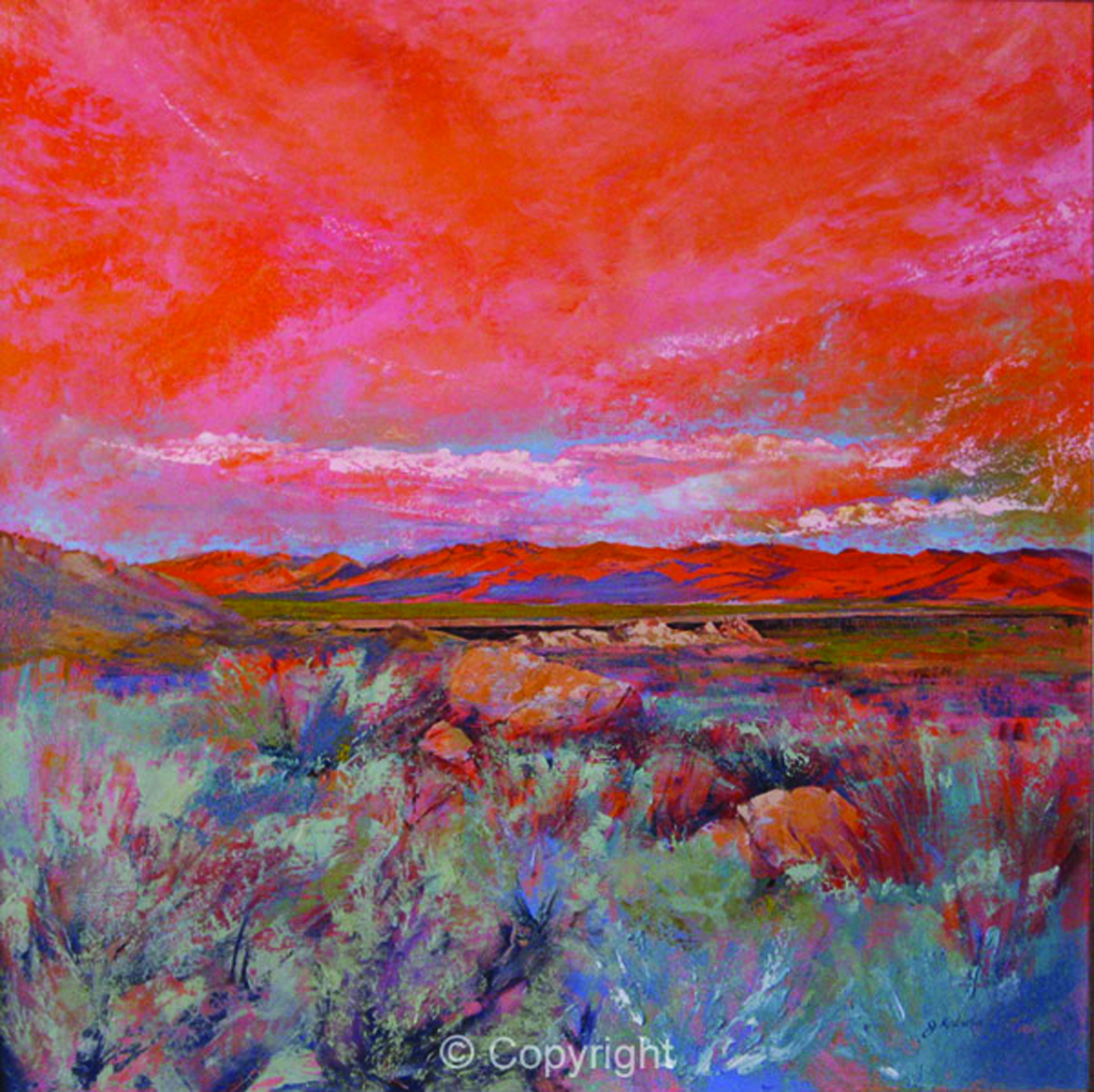
Kabala’s studies with photo-realist Robert Bechtle and the late Ted Goerschner inspired the evolution of her approach to painting, from realism to a colorful romanticism that evokes the ever-changing light and shadow in the basin and range.
Kabala sat down with The Sheet at Black Sheep to talk about painting in the field, growing opportunities for public art in Bishop, and the artist’s challenge of forgiving herself for working to pay the bills.
Sheet: How did you end up in Bishop?
JK: It just seemed like a really good place to give a try, when we [my husband and I] were young enough to do it. I really love it here. I like scrambling, I like bouldering. But I love peak climbing. I live in Starlight, near the Buttermilk climbing area. The Buttermilk area, you can go up there forever, and always find something nice.
Sheet: From your paintings, it seems like you have an interest in light. That seems like a great place to live if you do.
JK: Yes. Every single morning when I wake up, I want to take a picture. It’s the exact same view, and every single time, it’s different. I have a beautiful view—I’m the last on the block, so there’s nothing obstructing me from the Bishop Crest, which I often paint. It’s just spectacular.
Sheet: How did you begin to paint?
JK: I just always knew I was an artist. So I pursued it in college, and I’ve done so ever since, and when I find an instructor that I can learn from, I love to take classes, too.
Sheet: Who have you taken classes from?
JK: Ted Goerschner. I’ve studied with him several times. He would come up here and do seminars, and he was really good. I’d really like to see this area have more artists come and more classes. It’s such a beautiful area; why it doesn’t have a larger appreciation for the people that are artists, and attract more artists, I don’t know.
Sheet: As I understand it, you do your painting in the field?
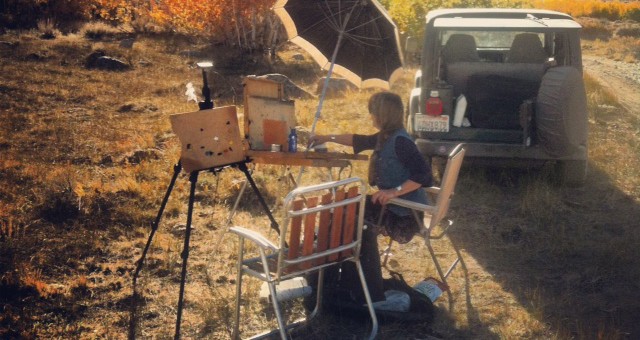
JK: That is what Plein Air painting is. It’s really a fun way to paint, and fresh. But I also do studies and take photographs and bring those back to the studio, which is not quite as Plein Air. But it’s a good way to get the colors down. And always, like I say, to stay true, it’s best to go out in the field.
Sheet: With that in mind, how much do you plan a painting beforehand?
JK: Well, you certainly try to. But paintings have a way of feeding back to you, and they have their own idea.
Sheet: Have you noticed an evolution in your style or your approach to painting since you began to paint?
JK: I’m working on my website (janicekabalapaintings.com), so I’m going through all of my paintings. I would say, yes, my style of painting has changed, that’s for sure. But still, there’s something there, where it is obviously my work. And it’s really fascinating to look at that, when you think you’ve come so far, or you’ve not … It’s so much more fun to see the body of work, instead of an isolated piece.
Sheet: So what do you see in common through your body of work?
JK: Even though my paintings are colorful, I think I have a really great respect for gray, coming from the Bay Area.
Sheet: That reminds me of shadow in addition to light—do you feel like you’re drawn to capturing shadow as well as light?
JK: Of course, because there’s not one without the other. I think that the really fun part is, what color is the shadow?
Sheet: On your website, you write that, “When art moves you, it is a spiritual experience.”
JK: It is, but it’s also a history of my life. It’s the way I communicate, or the way someone would write, or keep a diary. This is my life, and I do it through painting.
Sheet: Do you work with any other mediums?
JK: Well, I’m a painter, but I also, just to make money, do other things. Generally, I’ve done a lot of sign making. We did the Bishop Creek entrance there, and when they had that competition in Mammoth for the new [Gateway] sign, I won that competition and spent two or three years trying to get that in place. And the Art Commission quit over that, because they had fought for that also, but were overridden by some person. But that’s what I do, lots of signs and monuments, and then I make furniture, and sculpture with iron.
Sheet: That seems like it would be very different from painting.
JK: Well, you know, whatever way you feel like expressing yourself. And I really, really like iron.
I’m also involved in a focus group for the Warren Street Improvement Project, and we’re trying to keep that going in the right direction. There’s going to be an opportunity for a lot of art there, and this would be a really excellent time to bring different artists together. I think there are plans for having space for outdoor entertainment and art, and places for people to show their art, and maybe paint there. There just needs to be more art in Bishop.
Sheet: Is it hard to have a job that takes time away from the creative work you do for pleasure?
JK: Right, right, right. And you have to find some way to forgive yourself.
Sheet: You do, and it’s hard.
JK: [Laughs]. Yes, just really concentrate and say, ‘It’s okay; it’s life.’
Sheet: Are you at work on any paintings now?
JK: Well I always have a bunch of them. Sometimes I have to go away for a while, and come back and have a new perspective on it.
Sheet: Do you feel like your paintings are inspired by anything in particular?
JK: Well always, yes. It’s just a change in light, you know, sometimes. The other day, my son-in -aw was telling me about the clouds, and he was describing them to me, and I said, ‘Doesn’t that make you want to be a painter?’ And that’s the way you feel—because you see something and it’s so exciting to capture it.
Sheet: With that said, I think it’s interesting that your paintings aren’t purely realistic. Why not?
JK: Because I find the nail and twig painting very tedious, and not exceptionally pleasing to look at … I studied with Robert Bechtle; his paintings were really, painfully real. He liked to do benign, city, everyday types of paintings. He loved doing the chrome on cars.
Sheet: That seems very different from your own style.
JK: It is a long way from it. But that’s where I started. I certainly do appreciate his work, but Ted [Goerschner] kind of opened up another door for me. I really like to be as representational as needs be, but I also like to capture more the feeling of the landscape, and the color of it. I like paintings that pull you in and say something different to each person. And I like paintings that say something different each time you look at them. As the light changes on the painting, which is so cool with oils, that changes, also.
Janice Kabala’s work will be on display at the Black Sheep in Bishop through the end of the month.


